
Tift County Arrest Warrants Explained
An arrest warrant is a court order that lets law enforcement take a named person into custody. Sworn facts start the process. A judge or magistrate reviews them and asks whether they establish probable cause, a fair basis to think an offense occurred and this person committed it. Tift State Court lists arrest-warrant and search-warrant issuance among its express duties. Tift County Magistrate Court takes lower-court warrant and preliminary matters, while Superior Court handles felonies. Issuance and service are separate acts. The court creates the legal process. The Tift County Sheriff then receives it, records it, and serves it within the agency's role. Support Services enters warrant papers into its records-management system, RMS, and feeds wanted information into GCIC. Neither system offers a public statewide search. A Tift County arrest warrant can stay fully valid without ever appearing on the Sheriff's public list.
Tift County Probable Cause Route
The right court depends on the case. State Court handles misdemeanors and preliminary matters. Magistrate Court is a common first stop for lower-level complaints and warrant proceedings, and Tift County Superior Court handles felonies within the Tifton Judicial Circuit. A case can move between stages as it develops. The issuing court remains the best place to confirm a warrant and its current status, and the official State Court jurisdiction page lays out what that court covers.
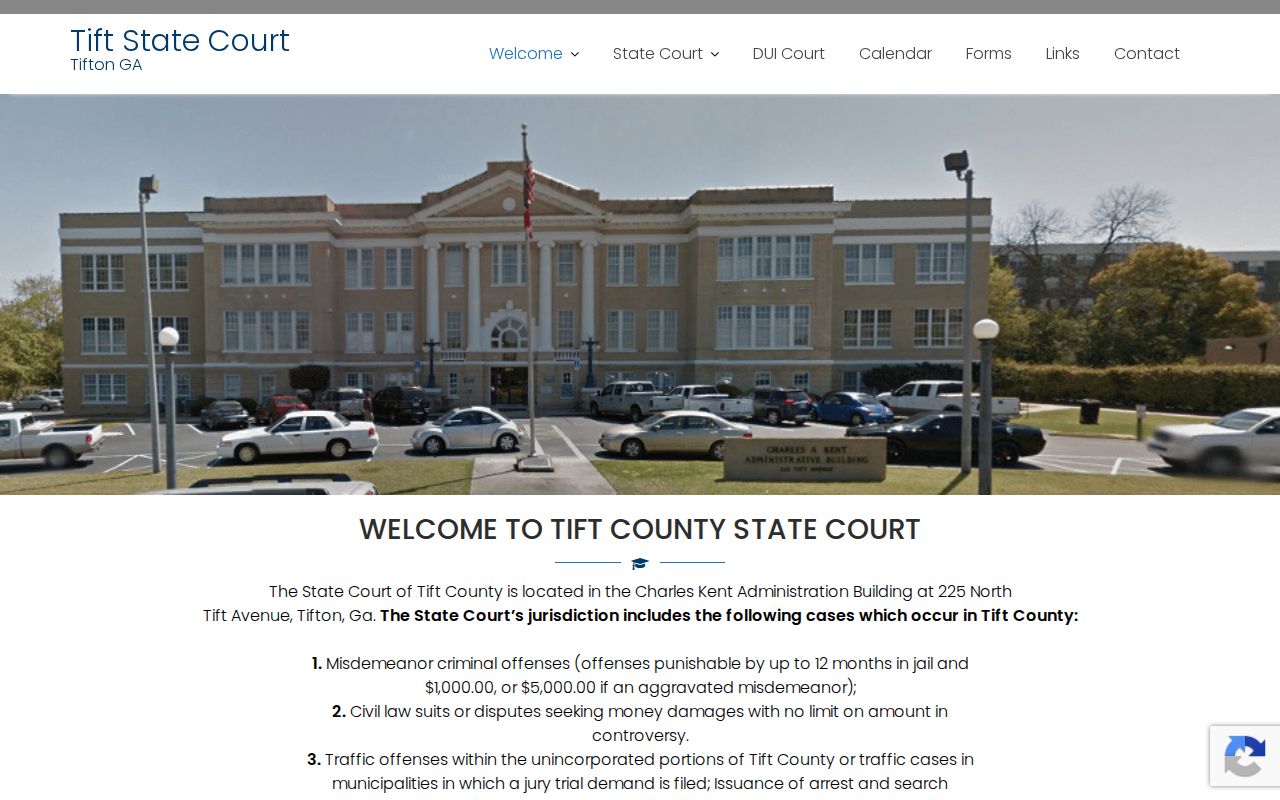
State Court's express warrant role makes it the natural home for Tift County misdemeanor and preliminary questions. The Georgia court map explains those court classes. It also guards against a common mistake: reading the Sheriff's operational entry as the whole court file. Ask which court issued the warrant, what case number attaches to it, and where the next appearance belongs.
Complaint or affidavit → probable-cause review → issuance → Sheriff entry and service → court appearance.
Inside a Tift County Arrest Warrant
A direct call to the Tift County court or Sheriff can surface far more than the public list ever shows. Request the warrant and case numbers, the issuing court, the issue date, the offense, the charge level, current status, and any bond direction. Ask whether the warrant was served, recalled, quashed, or still sits active. Recall means the court withdrew the process. Quash means it was set aside. Either way, confirm the outcome with the office holding the file.
| Warrant number | An agency or court identifier; no public Tift format is published. |
|---|---|
| Named subject | The legal name and identifiers used to distinguish similar names. |
| Charge or offense | The alleged conduct and classification when releasable. |
| Issuing court | The court controlling status, hearings, and recall procedure. |
| Bond | An amount, bond type, or no-bond direction, if release is allowed. |
| Issue and status dates | Dates tied to issuance, service, recall, or clearance. |
Tift County's Most Wanted page shows just three columns: Name, Date, and Arrested. It leaves out the warrant number, bond, court, offense, and any full status field. The Date label itself is undefined, and that thin layout is not the complete arrest warrant record.
Confirm Tift County Arrest Warrants
Call the Tift County Sheriff line for warrants, subpoenas, civil papers, and reports at 229-388-6021. The 24-hour main, jail, and bond line is 229-388-6020. Keep a legal name, date of birth, government ID, and any case number at hand. Ask what staff can confirm by phone and which court holds the file. The state clerk directory supplies the public contact details.
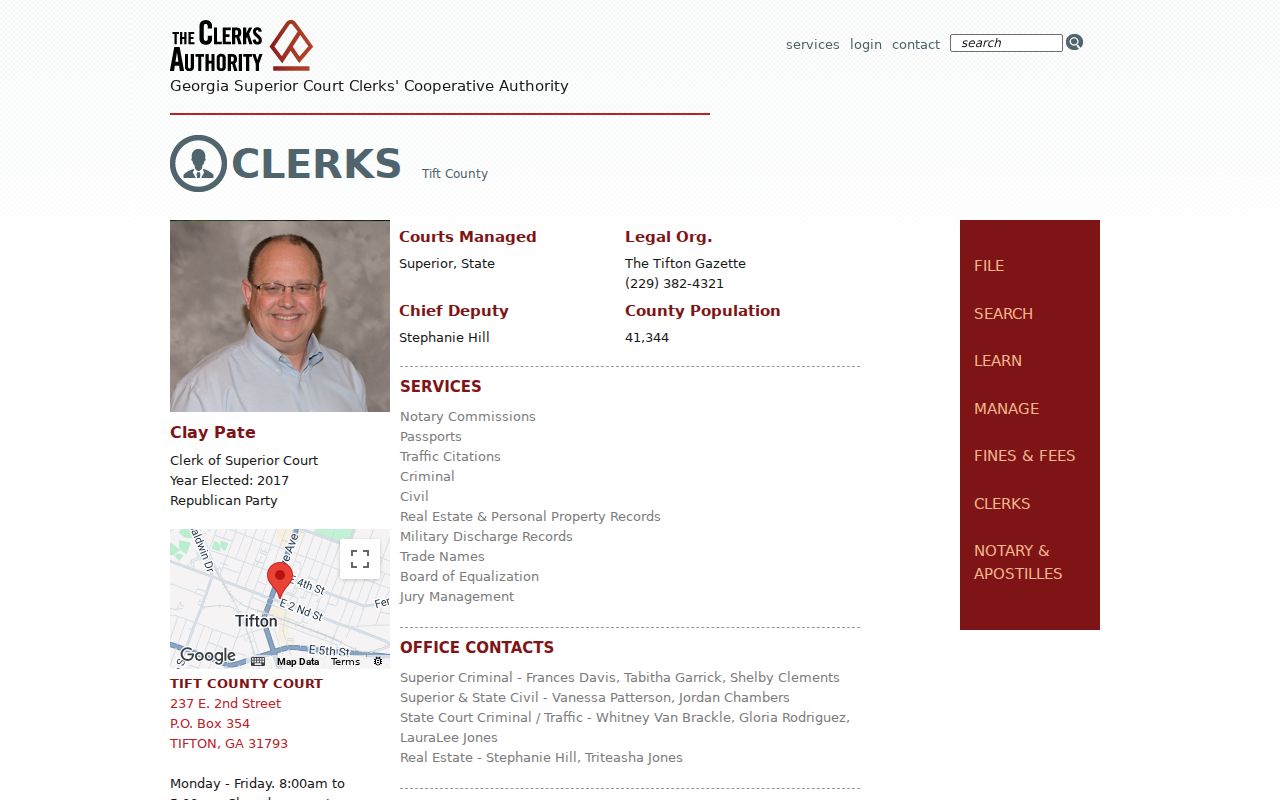
That directory confirms the shared clerk channel for Superior and State court records.
- Review the official Tift Sheriff Most Wanted page only as a curated lead.
- Call the Sheriff and ask for court, status, warrant number, and custody or bond directions.
- For Superior or State records, call the shared clerk at 229-386-7810 or State Court at 229-386-7921.
- For a Magistrate matter, contact that court at 229-386-7907.
Walking into a Tift County office to ask about a warrant can lead to immediate custody. Call first, because no public statewide Georgia warrant search replaces these local checks.
Serving Arrest Warrants in Tift County
Support Services logs warrant documents in RMS and enters wanted information in GCIC. Court Services blends security, process service, and transport work. Deputies or another authorized agency act after confirming the court order. Service may follow a planned surrender, direct contact, a traffic stop, or city-county coordination, and the Tift County Sheriff posts no separate public Warrant Division page, service calendar, or walk-in surrender form. After service, the person may be booked at the Law Enforcement Center and moved to the next court step. That path turns on the court, the charge, and the bond direction. The jail line runs around the clock. Round-the-clock phones do not promise all-hour information or release processing. Confirm the next hearing and the release paperwork.
Tift County Arrest Record Requests
When a phone check falls short, the Tift County Sheriff accepts verbal or written requests under the Georgia Open Records Act, O.C.G.A. §§ 50-18-70 through 50-18-77. Describe the record narrowly. Ask for an estimated cost, electronic delivery when available, and the legal basis for anything withheld or redacted. The Attorney General's FAQ describes a three-business-day response framework when production is practicable. Active investigations, sealed affidavits, juvenile files, and protected identifiers may stay limited. A records request does not stay, recall, or clear a warrant.
Key point: Request an identified record or a dated aggregate, not a broad list of private-person details.
Tift County Warrant Types Compared
A probable-cause arrest warrant starts a custody process. A summons orders an appearance without beginning as that kind of custody order. A bench warrant usually follows a missed court duty, while a capias directs custody and a capias pro fine targets an unpaid court-imposed fine. Ask the Tift County clerk to confirm the exact local label.
| Feature | Arrest Warrant | Summons | Bench Warrant |
|---|---|---|---|
| What it orders | Custody | Appearance | Custody after a missed duty |
| Basis | Probable cause | A charge or notice | Failure to appear or comply |
| Issuer | Judge or magistrate | Court or authorized officer | The responsible court |
| Response | Attorney, surrender, bond | Attend on time | Reset, recall, or appearance |
Tift County Search Warrant Distinction
An arrest warrant puts a person in custody. A search warrant, by contrast, lets officers go through a described place, person, or property. Different tools, different jobs. State Court in Tift County can issue either kind. In 2025, an official Tifton Police release described a search-warrant operation, though it created no public arrest-warrant roster. Affidavits and returns may be sealed or tied to an active investigation. The Most Wanted page proves nothing about search warrants. Name the record type you need and ask the issuing court or its holder about access.
If There's an Arrest Warrant for You
A missing public listing proves nothing. Walking in without a plan helps no one. Call a criminal-defense attorney, the Tift County Sheriff, and the issuing court, and confirm the case and warrant numbers, bond or no-bond direction, where to surrender, and the next setting. Ask whether counsel can arrange a surrender or a recall. Tift County offers no amnesty day, recall clinic, universal bond schedule, or public recall form. If bond is allowed, Tifton publishes cash, appearance, and property procedures. Cash takes correct change in the city process. An appearance bond uses a bonding company. A property bond needs a qualifying owner, tax proof, and photo ID. Those steps do not make every arrest warrant bondable, and posting bond does not dismiss the charge.
- Ask counsel to verify the court and status.
- Confirm custody, bond, and surrender instructions.
- Arrange the appearance through the named office.
- Attend the required court proceeding.
- Get written proof of recall, quash, service, or clearance.
Important: An active arrest warrant may be served at once, so call counsel and confirm custody and release logistics before appearing.
The wider resolution path sits on the Tift County warrant records home page. The issuing court still decides.
Tift County Arrest Warrant Court Files
Route felony case files and related warrant paperwork through the Clerk of Superior and State Courts. The office sits at 237 E. 2nd Street, Tifton. Hours run Monday through Friday, 8 a.m. to 5 p.m. State Court also publishes email, fax, mail, phone, and a general contact form, but that form is not a warrant search. Magistrate Court offers nCourt and public terminals. Neither exposes public criminal-warrant fields. The paper may sit elsewhere. It could be with the clerk, State Court, or the Sheriff, so a call ahead saves a trip. The routing is slower than one search box. It beats treating a curated list as a full Tift County arrest warrant index.